Understanding the Role of Vacon Drives in Sustainable Energy Solutions

The Importance of Vacon Drives in Sustainable Energy
Overview of Sustainable Energy Solutions
Vacon drives play a central role in modern sustainable energy efforts by optimizing power delivery across multiple systems. Engineers rely on these devices to match motor output precisely to demand, which cuts waste and supports cleaner operations. Vacon ac drives integrate seamlessly with renewable sources such as wind and solar installations, where fluctuating input requires responsive control. Facilities that adopt vacon drives report measurable drops in overall energy draw while maintaining output levels. This technology helps industries meet stricter environmental regulations without sacrificing productivity. Operators value the reliability of vacon drives when scaling up green projects because the units handle variable loads efficiently. As energy markets shift toward lower emissions, vacon drives provide the control layer that turns intermittent power into steady, usable supply for motors and other equipment.
How Vacon Drives Contribute to Energy Efficiency
Vacon drives improve energy efficiency by adjusting speed and torque in real time rather than running motors at constant full power. Variable frequency drives from vacon reduce electrical losses that occur during startup and partial-load conditions common in industrial settings. Plants that install vacon ac drives often see immediate reductions in electricity bills because the drives eliminate excess consumption. Maintenance teams note fewer overheating incidents and extended equipment life when motors operate under vacon drive control. The built-in intelligence in these units also enables better integration with energy monitoring platforms, allowing operators to track savings accurately. Vacon drives support regenerative braking in applications where motors feed power back into the grid during deceleration. This closed-loop approach turns what was once wasted energy into a usable resource and strengthens overall system sustainability.
Understanding Vacon Drives and Their Technology
What are Vacon AC Drives?
Vacon ac drives convert fixed-frequency power into variable-frequency output that matches the exact needs of connected motors. Engineers choose vacon drives for their compact design and robust performance in demanding environments. These units accept input from standard three-phase supplies yet deliver precise control across a wide speed range. Vacon ac drives include advanced filtering that minimizes harmonic distortion, protecting both the drive and downstream equipment. Facilities upgrade legacy systems with vacon drives to gain modern diagnostics and remote monitoring capabilities. The product line covers power ratings from fractional horsepower up to several megawatts, giving users flexibility when retrofitting existing electric motors. Many operators standardize on vacon drives because the same platform serves pumps, fans, conveyors, and compressors without custom engineering.
The Mechanism of Variable Frequency Drives (VFD)
Variable frequency drives operate by first rectifying incoming AC power into DC, then inverting that DC back into AC at the desired frequency and voltage. Vacon drives refine this process with high-speed switching that produces clean output waveforms for connected motors. The VFD controller continuously samples load conditions and recalculates output parameters hundreds of times per second. This closed-loop response prevents the motor from drawing more current than necessary. Vacon variable frequency drives incorporate built-in PID loops that maintain setpoints for pressure, flow, or temperature without external controllers. When motors start under VFD control, the gradual ramp eliminates the high inrush current that damages windings and trips breakers. The result is smoother operation and lower stress on the entire drivetrain.
Key Features of Vacon Drives
Vacon drives stand out through features such as modular construction, allowing quick replacement of power sections without removing the entire unit. Built-in EMC filters reduce electromagnetic interference that can affect nearby instrumentation. Vacon ac drives support multiple communication protocols including Modbus, Profibus, and Ethernet/IP, simplifying integration with plant networks. Advanced models include safe torque off functionality that meets modern safety standards without additional hardware. Operators appreciate the intuitive keypad and PC tools that speed commissioning of new installations. Vacon drives also offer built-in energy counters that display cumulative savings in kilowatt-hours, helping justify further deployments across sites. These capabilities combine to make vacon drives a practical choice for facilities pursuing both performance and sustainability targets.
Applications of Vacon Drives in Various Industries
Vacon Drives in HVAC Systems
HVAC systems benefit directly from vacon drives because fans and pumps rarely need full speed throughout the day. Installing vacon ac drives on air handlers lets facility managers reduce airflow during low-occupancy periods while preserving comfort. Variable frequency drives from vacon also improve dehumidification performance by maintaining precise coil temperatures. Chiller plants equipped with vacon drives show lower condenser water pump energy use because the drives match pump output to actual cooling load. Maintenance staff report quieter operation and reduced vibration when motors run under vacon drive control. Building automation systems communicate with these drives to optimize start times and avoid demand spikes. The cumulative effect across large commercial properties often exceeds 30 percent energy reduction compared with constant-speed operation.
The Role of Vacon Drives in Electric Motors
Electric motors account for the majority of industrial electricity consumption, making precise speed control essential. Vacon drives extend motor life by eliminating across-the-line starts that stress bearings and insulation. Variable speed drives from vacon allow motors to run at the lowest speed that satisfies process requirements, cutting both energy and noise. In pumping applications, vacon ac drives prevent water hammer by ramping flow smoothly. Mining operations use vacon drives on large grinding mills where torque control prevents mechanical shock during startup. Marine propulsion systems rely on vacon drives to deliver reliable power under varying sea conditions. Across these diverse uses, the common advantage remains the ability to tune motor output exactly to demand without mechanical throttling losses.
Innovative Uses of Variable Speed Drives in Actuators
Actuators in process industries gain finer positioning accuracy when powered by variable speed drives. Vacon drives supply the controlled torque needed for quarter-turn valves and dampers without overshoot. Engineers pair vacon ac drives with smart actuators to achieve closed-loop position control that previously required servo systems. In solar tracking arrays, variable frequency drives adjust panel angles continuously while minimizing power draw during repositioning. Water treatment plants apply vacon drives to actuated gates that regulate flow between basins. The drives also enable soft-stop functions that protect seals and linkages from sudden stops. These applications demonstrate how vacon drives expand the capabilities of standard actuators while supporting overall energy reduction goals in automated facilities.
Benefits of Utilizing Vacon Drives for Energy Management
Reducing Energy Consumption with Vacon Drives
Vacon drives cut energy consumption by matching motor speed to real-time process needs instead of running at fixed maximum output. Facilities that retrofit pumps and fans with vacon ac drives commonly record 20 to 40 percent lower electricity use. Variable frequency drives eliminate the energy lost across throttling valves and dampers. Vacon drives also reduce peak demand charges by spreading motor starts over longer intervals. Operators monitor savings through the drive’s built-in energy counters and adjust setpoints for further gains. In multi-motor systems, vacon drives coordinate speed references so that the most efficient combination of units runs at any given moment. This level of control turns routine equipment into active participants in site-wide energy management strategies.
Enhancing System Performance with Vacon AC Drives
Vacon ac drives improve system performance through faster response to load changes and better regulation of speed under varying conditions. Motors controlled by vacon drives maintain tighter tolerances on pressure and flow, which raises product quality in manufacturing lines. The drives provide diagnostic data that predicts bearing wear or misalignment before failure occurs. Maintenance teams schedule repairs based on actual operating hours rather than calendar time. Vacon drives also support flying start, allowing motors to reconnect to a spinning load without stopping the process. These performance enhancements translate into higher uptime and fewer unplanned outages across continuous operations.
Cost-Effectiveness of Using Variable Frequency Drives
Variable frequency drives from vacon deliver rapid payback through combined energy savings and reduced mechanical wear. Plants often recover the cost of vacon ac drives within two years when motors run continuously. Lower maintenance expenses arise because soft starts and controlled ramps decrease stress on couplings, gearboxes, and impellers. Vacon drives also reduce spare-part inventories by standardizing control across multiple motor sizes. Financing programs offered by suppliers further improve cash flow while the equipment generates ongoing savings. Decision makers evaluate total cost of ownership rather than initial price alone, and vacon drives consistently rank high in such analyses because of their durability and support network.
Future Trends in Vacon Drives and Sustainable Technology
Advancements in Vacon Drive Technologies
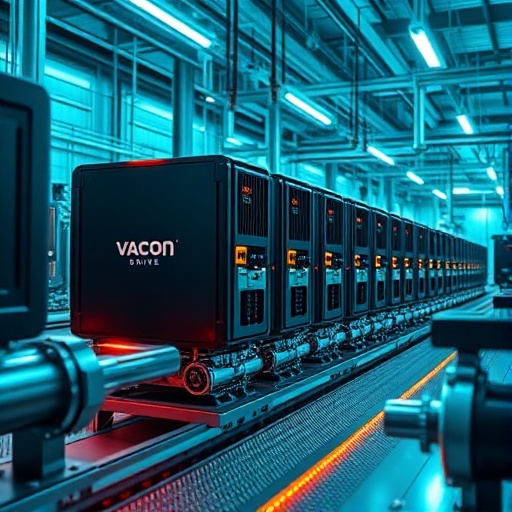
Recent advancements in vacon drives include silicon carbide power modules that raise switching efficiency and shrink heat sink size. Newer models incorporate edge computing that processes sensor data locally before transmitting summaries to cloud platforms. Vacon ac drives now feature enhanced cybersecurity measures that protect against unauthorized parameter changes. Software updates delivered over the air allow facilities to add new control algorithms without hardware replacement. These developments keep vacon drives aligned with evolving industrial requirements while maintaining backward compatibility with existing electric motors.
The Role of Vacon Drives in Smart Grids
Smart grids depend on responsive loads that can adjust consumption based on real-time pricing and availability signals. Vacon drives enable motors to participate in demand response programs by automatically reducing speed during peak periods. Variable frequency drives communicate with grid operators through standardized protocols, allowing aggregated load shedding across multiple sites. Vacon ac drives also support vehicle-to-grid concepts when paired with charging infrastructure that uses motors for energy transfer. This bidirectional capability strengthens grid stability as renewable penetration increases. Utilities view facilities equipped with vacon drives as valuable assets for balancing supply and demand without additional generation capacity.
Sustainability Goals and Vacon Drives
Corporate sustainability targets increasingly specify measurable reductions in energy intensity. Vacon drives help organizations meet these goals by delivering verifiable efficiency gains across motor-driven systems. Companies document progress through annual sustainability reports that cite data from vacon drive energy counters. The technology supports circular economy principles because drives can be remanufactured and motors reused at lower speeds. Vacon drives also facilitate the transition to hydrogen-ready processes by providing precise control of compression and pumping equipment. As global standards tighten, the adaptability of vacon drives positions them as foundational components in long-term decarbonization roadmaps.